









EDITOR'S NOTE: This article contains spoilers for Avatar: The Last Airbender.
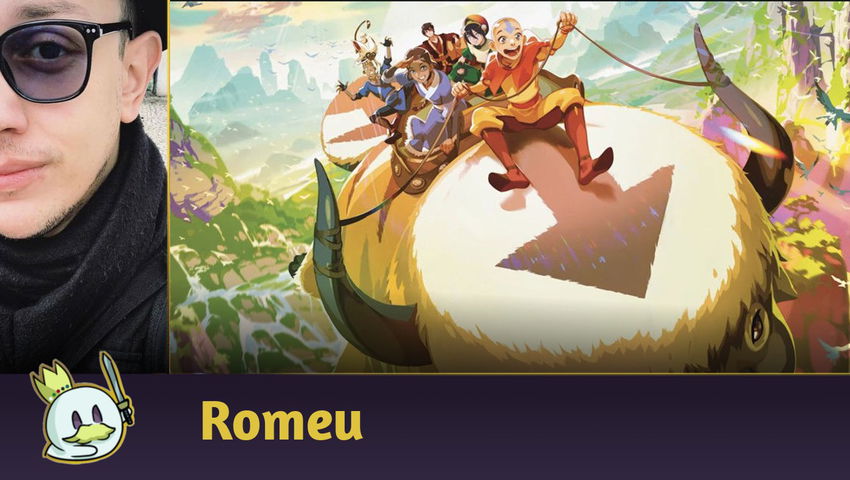
If, a few years ago, someone had said that Magic: The Gathering would collaborate with the animated series Avatar: The Last Airbender, it would have seemed like a lie. But the Universes Beyond series is here to stay, and the famous animation joins other major titles that have received full sets, such as The Lord of the Rings and Final Fantasy.
Although the cartoon aired during my early teens, I had never actually watched Avatar, so my connection with the set was almost as non-existent as with Doctor Who. However, after many people recommended it and after watching the Netflix live-action version, I decided to give the 2005 cartoon a try.
To my surprise, what I somehow considered uninteresting at age 12 has so many layers to the world it's set in and the characters themselves that it became one of the most engaging American animated series I've ever seen. Even more surprising was how, despite being ten years old, the animation managed to maintain relevant themes and barely stand the test of time—its funny moments are still entertaining, its character development doesn't feel dated, and the overall context of the story still resonates with many dilemmas and topics we're still grappling with in 2025.
Furthermore, watching the animation shed new light on the revealed cards. Now, many of them make a little more sense, and some memorable and iconic moments are already properly represented. If anything, watching Avatar made the Magic set more appealing to me.
So, with fresh eyes on Avatar: The Last Airbender and all its story has to offer, I've listed in this article some memorable moments I'd like to see in a collaboration with Magic: The Gathering, whether with their own cards or reprints.
Moments from Avatar: The Last Airbender we want to see in Magic
Honorable Mentions
There are some moments that would easily make this list, but they've already been confirmed and their cards revealed. Therefore, we won't mention these scenes in this article. Below are the cards that represent them.

It'll Quench Ya depicts the moment when Sokka (and Momo) drink cactus juice, which has hallucinogenic effects and turns an otherwise stressful journey into a fun watch, despite everything at stake at the time.
“My cabbages!!!”
The alternate version of Fated Firepower depicts the moment when Aang and Zuko perform the Dance of the Dragons during their Firebending training.
Ozai's Cruelty depicts the moment when Zuko is defeated by Ozai in an Agni Kai, and his face is permanently scarred by his father's fire. This moment sets in motion the chain of events that, three years later, would lead to the Avatar's journey.
Yue, the Moon Spirit is a key character in the final episodes of the first season of Avatar, especially due to her relationship with the Moon Spirit. Tui and La are two crucial elements to the narrative and themes in the animated series, and Yue plays a key role in both.
Abandon Attachments depicts the moment when Aang faces the challenge of setting aside his worldly emotions to achieve and control the Avatar State, especially the feelings for Katara throughout the story.
Redirect Lightning depicts the moment when Zuko deflects a lightning attack during the third season, after learning this skill from his uncle, Iroh, in the second season.
The Little Soldier Boy Song

The episode The Tales of Ba Sing Se is probably one of Avatar's most memorable, presenting the simplest and most human approach to storytelling: the episode presents a mundane story for each character, as if it were a moment when they cease to be the central focus of the plot and become ordinary people experiencing everyday situations.
The highlight, however, is the story of Iroh, who gets into minor misadventures while teaching valuable lessons to younger people—one of them even to a man who tried to rob him with a dagger. At the beginning of the tale, Iroh sings a song to an Earth Kingdom baby, and at the end, we see him sing the same song in mourning for his son, killed years earlier during a confrontation in Ba Sing Se.
Few moments in animation have as much emotional impact on the audience as these brief minutes we experience with Iroh. His tale of grief and experience was dedicated to Mako, the character's voice actor in the first two seasons, who passed away shortly before the episode aired.
Having this moment represented in a card like Rest in Peace is precisely the punch in the gut I expect from the Magic design team when it comes to the way they so richly detail the universes they work with in these collaborations.
There Is No War in Ba Sing Se

“There Is No War in Ba Sing Se” is a phrase repeated constantly during some of the episodes set in the city of Ba Sing Se during the second season. Despite the R-rating, the animation doesn't shy away from tackling themes like propaganda and cultural alienation in incredibly direct ways.
Despite Aang and the others' attempts to warn of the growing threat of the Fire Kingdom approaching the city, the only response the group receives is that there is no war in Ba Sing Se, a statement made even more frightening when their guide is replaced by someone else who repeats the same phrase.
As the minutes pass, it becomes increasingly clear that a powerful propaganda machine is controlling the politics and society of Ba Sing Se, culminating in one of, if not the most, gripping storylines of the three seasons.
Toph Learns Metalbending

We already know that Toph, the First Metalbender is one of the cards in the set, but it would be even more interesting to have some removal similar to Abrade or Suplex, which interact with artifacts, highlighting the moment when she actually learns metalbending after being imprisoned in a steel prison.
While it's impossible to reproduce the same scene on a single card, the episode connects, through dialogue, the moment Toph first metalbends with the lessons Aang is receiving from Guru Pathik, culminating in how what the protagonist is learning at that moment is also being applied by Toph at that same moment, demonstrating that the theory of how everything connects is feasible for bending power, but also that Toph is not only the first metalbender but also the most talented earthbender who ever lived.
Tui & La

Tui and La are, respectively, the spirits of the Ocean and the Moon in the Avatar universe and appear in the final episodes of the first season. They manifest in the physical world as two fish, one black and one white, endlessly circling each other, reminiscent of the Yin-Yang symbol of ancient China. To reinforce this image, "Tui" and "La" mean "pull" and "push" in Mandarin, respectively.
Yin-Yang and/or "push" and "pull" are recurring elements in the nature of many interpersonal relationships in Avatar, filled with moments of closeness but also of distance: on the one hand, Aang and Katara alternate in this cycle with some frequency in subsequent seasons as they mature and face new challenges, while Zuko experiences this duality throughout practically the entire second season in various situations with himself, with Aang, with Iroh, and even with villagers he tries to rescue, as well as with a potential lover in Ba Sing Se.
The symbolism of Tui and La's duality, while not directly referenced, is essential to understanding the characters' development in the animated film as the plot unfolds, with some of the highlights being Aang entering the Avatar State, Zuko deciding to return to the Fire Kingdom with his sister, or Katara choosing forgiveness over revenge.
Therefore, despite their few on-screen appearances, Tui and La seem so integral to the Avatar lore and the themes it addresses that it would be a shame for them not to be properly represented in Magic: The Gathering.
Bloodbending

Bloodbending is an inherent ability of waterbenders that allows them to control the movements and actions of others by manipulating the fluids in their organs. It was discovered by Hama during her years of imprisonment in the Fire Nation after numerous experiments with rodents on full moon nights.
While Katara later uses her bloodbending ability in the same episode, Hama deserves to appear on a card as a Bloodbender and/or as her "Puppet Master" title. She could be depicted as a card with an activated ability that gains control of a creature the opponent controls, or even as a variant of Sower of Temptation or Zealous Conscripts.
Zuko Confronts Ozai
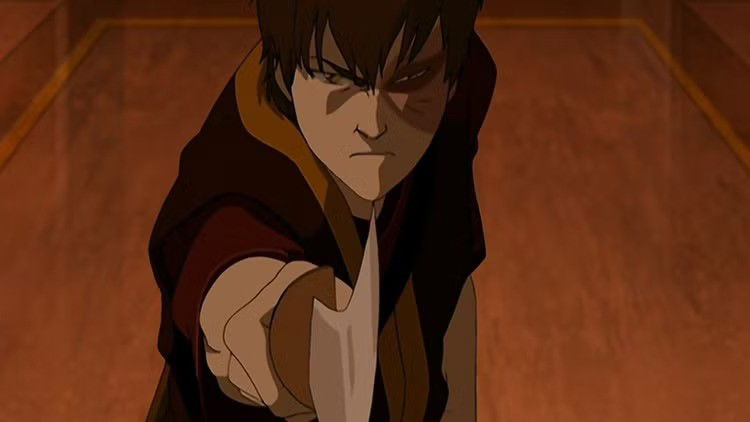
Although the show is called Avatar and Aang is the protagonist, Zuko has the best character development. a. In a way, his dilemma in the story is one commonly portrayed in the Persona game series, especially in the fifth installment: Zuko struggles with an identity imposed on him, whose nature runs counter to his principles, a price he is willing to pay to be accepted by his family and his kingdom.
As the episodes progress, however, we see the character mature, gain new experiences, experience the consequences of the Fire Nation's actions firsthand regardless of his own actions, and even become content with an ordinary life. However, at the end of the second season, Zuko is drawn back into the conflict of war and the temptation to be accepted by his father, Lord Ozai.
It is this sequence of events that makes the moment he finally confronts Ozai, during the solar eclipse that stripped the Firebenders of their powers, so important. It's the result of all the maturity that these three years away from home brought him and the shifting perspectives that ultimately led him to conclude that his destiny wasn't the one imposed by Ozai and that he could lead the kingdom, but on a path that would end the war.
In the following episodes, we see Zuko face various challenges in his quest for redemption for the actions he committed at the beginning of the story, until he is eventually humanized by those who once saw him as an enemy and joins Aang's team once and for all. At the end of the series, his journey eventually leads him to what he wanted—to become the Fire Lord—but on his own terms.
Aang strips Ozai of his bending power

Although depicted in the Force of Negation reprint of the special slots, the moment when Aang uses energybending to strip Ozai of his powers is so striking that it deserves its own card.
Throughout the third season, we follow Aang as he searches for a solution to his confrontation with Ozai, unsure of exactly how the battle should end. Despite the numerous times he's been advised to kill the Fire Lord, this action would go against Aang's principles and everything he was taught by the Wind Nomads—as the last of his tribe, if Aang succumbed to the instinct to kill, he would also be destroying the last vestige of the culture he grew up with and of which he is the only one who still remembers.
Aang then uses the Avatar's powers to strip Ozai of his bending ability, rendering him an "ordinary human" and, even worse for the villain, a weak person. In a way, the fate the Avatar gave him was worse than death itself, as Ozai would live to see everything he built undone by his successor, Zuko, who ushered in a new era of peace for the four nations.
Wrapping Up
That's all for today!
If you have any questions, feel free to leave a comment!
Thanks for reading!





 Sign in and join the conversation
— Comments 0
, Reactions 1
Be the first to comment