










Indomitable Creativity has had one of the most interesting trajectories in recent Magic history. Once considered one of the worst mythics in Aether Revolt, the card was relegated to bulk boxes and gathering dust in binders for years until receiving the appropriate support to become a staple in Modern and Pioneer. It initially teamed with Xenagos, God of Revels and Worldspine Wurm to create a combo-control deck and subsequently evolved to embrace new bombs like Atraxa, Grand Unifier and Valgavoth, Terror Eater.
With new additions to each set over the past few years, Izzet Creativity remains a viable contender in the Pioneer Metagame and has gained more traction recently as the format's competitive landscape has polarized between highly interactive matches and games with little to no player interaction—Creativity can operate on both fronts, making it a versatile choice.
The Decklist

The current version forgoes using many bombs to focus on consistency and the ability to execute an effective Control plan without running out of steam. Our strategy involves using cards that place creature or artifact tokens, targeting them with Indomitable Creativity and searching for our bombs. Valgavoth, Terror Eater and Atraxa, Grand Unifier are our two targets, with some lists opting for Titan of Industry as a third option, but I don't consider it necessary at the moment.
Izzet Creativity is a Combo-Control similar to the classic Splinter Twin, except that we don't win the game instantly; we just generate a lot of card advantage or pose a threat that many archetypes will struggle to respond to appropriately. However, we also suffer partially from the lack of individual quality of our cards: due to deckbuilding restrictions, we can't use more creatures or take advantage of powerful artifacts like Cori-Steel Cutter, and even with some support in recent years, our card pool is still relatively dated and lacking in any major innovations.
Maindeck
The combo.
Our plan involves putting one of these creatures into play with Indomitable Creativity, preferably on turn four, where either makes a huge difference in the game's outcome.
Atraxa, Grand Unifier offers massive card advantage, while a 7/7 body with a wealth of abilities is often enough to hold aggro and force removal from Midrange, while also setting up the next Creativity stack.
Valgavoth, Terror Eater is the payoff that usually wins most games. Its body ends the game in two to three turns, Lifelink grants extra gas, and it's incredibly difficult to interact with while also generating card advantage with the opponent's spells.
The enablers.
Deduce works almost like Think Twice, except that the second cast comes from a Clue token, which we can sacrifice to Indomitable Creativity or crack for an extra draw.
Prismari Command has several functions, such as interacting with small creatures, filtering the hand, creating Treasures to accelerate mana and/or target Creativity, and destroying artifacts, which has become more important in the current Metagame due to Cori-Steel Cutter and Monument to Endurance.
Fable of the Mirror-Breaker also does a bit of everything, including easily offering up to three bodies to Indomitable Creativity while filtering its owner's hand in the second chapter.
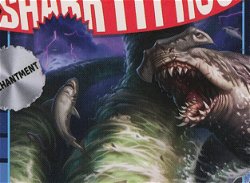
Shark Typhoon can be used to draw a card for a low cost while putting a token into play at instant speed, and it also serves as an alternative win line in attrition games where we need to adopt a more "Izzet Control" approach.
Since we're essentially a combo deck, Spell Pierce is a great way to hold off your opponent's interaction on the turn we perform the combo. In some cases, it's possible to swap one or two copies of it for Dispel, but the current metagame requires a more comprehensive answer due to cards like Unholy Annex and the like.
Censor also functions as a cheap interaction, with the bonus of functioning as a "cantrip" due to Cycling. It's a common side-out in games where the opponent doesn't have a greedy mana curve.
Volcanic Spite is a cheap removal against creatures and Planeswalkers with the bonus of allowing us to reshuffle our Indomitable Creativity targets back into the deck.
Unable to Scream is the closest thing to unconditional removal we have in blue today. Turning a creature into a 0/2 with no abilities with  tends to be enough to deal with several cards in the metagame. It's a side out in less interactive games and/or where creatures are an issue due to ETB effects.
Mirrex provides a steady source of tokens for Indomitable Creativity. In longer, less interactive games, such as against Azorius Control, it can be used as a complementary win condition.
Sokenzan, Crucible of Defiance also creates tokens for Creativity, with the advantage of not being telegraphed as we can activate it from our hand at instant-speed.
Temple of Epiphany filters the top without putting a card to the graveyard—relevant in an archetype where we want to avoid drawing creatures so we can pull them with our main combo piece.
The other dual lands basically serve to maintain the consistency of accessing  without giving up casting blue spells from the first turn, with a full set of Steam Vents, Spirebluff Canal, and Riverglide Pathway accompanied by copies of Shivan Reef and Riverpyre Verge.
Sideboard
Aether Gust works as a targeted answer against Red Aggro, but it also works against Lotus Field to delay a few turns since they are faster than us to complete their combo. It's also a useful tool against Izzet Phoenix and other archetypes that are predominantly red or green.
Leyline of Sanctity's main focus is to protect us from targeted discard like Thoughtseize and Duress against Midrange decks. There are some combos or archetypes where it may be necessary, but the card's goal is to prevent certain types of interactions.
Mistrise Village protects Indomitable Creativity from Counterspells and can also work to protect certain key cards like Shark Typhoon in these matchups.
Sire of Insanity is an excellent payoff in Control games. If left unresolved, it will permanently drain both players' resources, except we'll have a board advantage with a 6/4.
Portal to Phyrexia works best against Midrange as a complementary win condition, where leaving it in play means reusing the opponent's threats while its ETB makes it relevant at any stage.
Narset, Parter of Veils guarantees more resources in attrition games while stopping recurring draws against Izzet Phoenix, Azorius Control, and Rakdos/Mono Black Demons.
The extra copies of Shark Typhoon enter in games where we know executing the combo will be harder than expected and we need a more consistent alternative win condition, especially against Midrange, Control, and also in the Mirror.
Sideboard Guide
Mono Red Lynx
IN
OUT
Rakdos Demons / Mono Black Demons
IN
OUT
Azorius Control
IN
OUT
Lotus Combo
IN
OUT
Izzet Phoenix
IN
OUT
Selesnya Angels
IN
OUT
Boros Hammer Time
IN
OUT
Conclusion
That's all for today!
If you have any questions, feel free to leave a comment!
Thanks for reading!







 Inicia sesión y únete a la conversación
— Comentarios 0
, Reacciones 1
Se el primero en comentar