









Atraxa - The Best Control List in the Meta
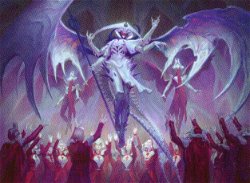
In today's article, we'll talk about our favorite Phyrexian angel and the best control list in Duel Commander.

But who said Atraxa is the best control list in the format?
To put it bluntly, only a few commanders see play in DC. Most players use Tivit, Seller of Secrets, Hidetsugu and Kairi, and Atraxa herself. Tasigur, the Golden Fang is incredibly popular nowadays, and the most successful lists are hard control lists. Tasigur will most likely take down Atraxa really soon.
Today, this is the new trendy deck, and that means we'll find more of them at the top of the rankings. I'm certain more Tasigurs are performing badly in events as well.
According to our main database (mtgtop8.com), Atraxa is the most popular strategy in big tournaments (3-star tournaments), but if you look at all tournaments, you'll find more Hidetsugu lists as well as Tivit lists. I believe that's because Atraxa is a bit more difficult to understand and play correctly. It is a four-color list after all, so you can build it in many ways. Nonetheless, this is also why it is so interesting for decktechs.
Game Plan
Atraxa, 90% of the time, is a hard control strategy. The goal is to always put lands in play and interact with everything the opponent does. To get ahead in cards, you'll play generic card draw (like Brainsurge), effects that repeat themselves (like Shorikai or Teferi), or Atraxa herself, which draws 3~6 cards when she enters play.
The other 10% of decks center around one card in particular.
Dream Halls
In this deck, this card is broken. Atraxa is gigantic, incredibly strong, and easily draws everything you need. On top of it all, at times you'll get a really good hand turn after turn and get to play Teferi, Time Raveler, return Atraxa to your hand, and play her again. Or play a Supreme Verdict and then play Atraxa again.
Dream Halls should remain in the format, but some players have been asking WotC to ban it specifically because of Atraxa for a while. Banning Dark Ritual made things a little better in this sense, but Dream Halls is still the number one card you get with this deck's tutors.
The Cards
The cards that see play with Atraxa are either counters, removals, card draw, or threats. Just a few cards don't fit these categories (and we'll call them "good stuff" cards). Let's go through the main cards in each category before we go over the standard version of this deck. Then, we'll show you some "different" options.
Counters



 +
+The rule is clear: the cheaper it is, mana-wise, the more likely it is to see play in this list. Atraxa lists usually only play around 20 counterspells. Counterspells that are more specific, like Negate, Dovin's Veto, or Spell Pierce, don't see play with Atraxa and are hardly considered options. Because these lists often play other colors, they can play better counterspells.
Atraxa, then, often struggles against other control lists because they end up playing more counterspells.
Removals
Atraxa can use many versatile removals because of the colors she plays, and they often work on other things besides just creatures.
Creature removals in this list usually cost 1. Options that are more versatile (that is, that deal with artifacts/enchantments/planeswalkers) usually cost 2 or 3.
Furthermore, these decks usually play incredible sweepers, that is, that are often better than Wrath of God and Damnation. The magic number is around 12 removals (you can play some more if you believe your local meta is more aggressive).
Card Draw
When it comes to card draw, one important thing to note is that you must play cheap ones. Atraxa lists usually play six -cost cantrips (we're including landcycling as a cantrip) and viable -cost options (there are 4 good versions of Divination). Some players sometimes consider heavier options as well.
There's nothing wrong with Serum Visions or Consider, but they don't usually see play in these lists. Most of the time, we use landcyclers very carefully because they're vulnerable to enemy Animate Deads.
All of these cards are extremely new. Soon, 4-cost card draw will no longer see play in these lists.
These are the most popular cards in this mana curve for this list. You can reuse one and recycle the other for 2 mana (this card also lets you dig really deep through your deck). I haven't seen a Fact or Fiction in this list for a long time...
Threats
Atraxa plays 1 to 2 finishers. Besides Atraxa herself, the only other card we see sometimes is:
The most recent lists haven't played it, however!
All of these cards can end the game if you pair them with a few other cards in this list.
Don't be fooled, though: a Shorikai on the board is quite destructive in Duel Commander. No deck is ready to deal with an active Shorikai on the board (maybe a Hei Bai with Shrines could...)
This deck doesn't play many threats, and the ones it does play usually do something more than just end the game. They usually allow you to put pressure on the opponent as you progress your main game plan (putting an Atraxa in play once the board is controlled).
Good Stuff
This list plays many good stuff cards.
Some are recursive.
Some help you fight for the board.
Tutors…
And many other options. We'll go over them soon.
This mana base has to be this way because this deck plays 4 colors. Besides fetchlands, surveil lands, dual lands, shock lands, and similar (particularly lands that give you  ), this deck won't use many utility lands.
These lands do something besides give you mana. All of them are great, in particular Mistrise Village, which beats other control decks (if you resolve a Teferi with it in play, then...).
There are many lands that simply couldn't make it into this deck.
Many manlands are playable, but they all come into play tapped. Eiganjo doesn't give you blue mana and doesn't fix anything for this deck on the spot. This deck already plays many removals, and you'll usually prefer playing another land than keeping another removal in hand. Like so, using these cards is probably not worth it.
This is a pretty standard list. It only plays two unusual cards: Veil of Summer and Ancient Cornucopia.
In a 4-color deck, Cornucopia represents ramp, a mana fix, and some valuable life points. With it, you'll be able to stabilize after you take control of the game and won't be that vulnerable to "sudden deaths". Not everyone agrees this card is decent in this list, but, depending on your local metagame, it can be great.
This is the best (and only?) way to put an Atraxa in play on turn 5 (if you get a Temple of the False God as it triggers). In the rare occasions you already have Temple in play, it is even better.
In control mirrors, it truly shines. Against aggro lists, it works - it allows you to put your commander in play a lot earlier and is a blocker on your board. It's not great, but it isn't bad.
These are good blockers, and each one has an upside. The problem with playing creatures is that they'll be vulnerable to dead cards the opponent has in hand (like a Flame Slash), which might make controlling the game a bit harder.
A nice way to handle enemy pressure is to not let them attack. I won't say they won't be able to do anything about it, but there are only a few options that can answer the enchantments above.
Eventually, someone got the idea to use this small Atraxa in this deck to commander swap in game 2. In theory, it seems good, but, in practice, no one does it. Maybe it wasn't tested enough or it failed when it was. I believe it is unnecessary, but I confess that, in many matches, all I wanted was a 4/4 with lifelink and vigilance.
There are many threats that are at least up for discussion for this list. As a rule, our commander is so strong that we really shouldn't add more threats in her mana curve. Still, none of these cards are terrible, and a decent number of them can simply win the game.
Sample Hands
This hand is great in many matches. You should get a white/blue land (with your Arid Mesa) and a blue/green land (or black/blue) with Verdant Catacombs. Ideally, you should get a surveil land on the first turn and then decide between a second fetch land or a basic swamp.
Evasive Action will work as a Mana Leak. You can play Tainted Pact to find a Dream Halls (though I'd hardly go for that - it's not versatile enough) or another land drop (if you can't find lands soon, which is unlikely).
I'd be careful with this hand against super aggressive lists (Yoshimaru or Slimefoot) if I were drawing first. Still, playing Pact into Toxic Deluge on turn 3 is most likely good enough to stabilize your game plan.
You can easily keep it in most matchups.
This hand is a lot worse than the one above because it simply doesn't do enough. It can't do anything decent against an Utopia Sprawl and Slimefoot and Squee on turn 2, for instance.
Still, I'd only mulligan it against combo lists. Against creature lists, Cut Down is strong, and, in control mirrors, it has enough lands and Mistrise Village.
We might not want to mulligan it in most cases, but please note it is much less reliable than the other hand above. Unfortunately, with control lists, we'll keep many cards "just in case" something happens in our long matches. With aggro lists, for instance, our opening hand and first few turns determine how our match will go, so they're a lot more important.
This hand is weird. We can't really tell how useful this Bowmasters will be. Spell Snare is the same (believe me - I once kept a Spell Snare and got hit with a 1-drop + a surveil land + and another 1-drop on turn 2). Ancient Cornucopia will create value in long matches, but we'll hardly be able to sacrifice our entire turn 3 for it.
This hand most likely beats a Yoshimaru or a Cloud, and will most likely lose to a Deadpool. We probably won't make it against other control lists in long matches with just three lands in hand. It doesn't draw cards either.
If I'm playing first, I'd probably mulligan it. The only reason to keep it is if I believe Bowmasters can make a big difference (for instance, if I'm facing a deck full of dorks or a Lier with lots of card draw). If I'm drawing first, it is a bit better.
Think of a great hand against control lists that is also terrible against anything else. You're looking at it. This hand basically doesn't do anything besides "land-go" until turn 3. In a mirror match, I can't see how it would lose. Against an aggro list, I can't see how it would win (that's a lie - I can see it, but you'll have to draw removals and counters immediately and that's not a reliable game plan).
Wrapping Up
This deck is pretty straightforward. In the past, putting an Atraxa in play was always a good option. Deadpool, Trading Card changed that a bit because giving an Atraxa to the opponent is dangerous (this opponent even draws more cards because it plays more artifacts and enchantments).
We must also be careful with the Monarch and the Initiative. We don't have enough creatures to use these effects and they usually win long matches - which is exactly what we want to do.
Other than that, as we mentioned, it's all pretty simple: play lands and survive. All the cards in this list will help you do that - which is another reason why you should be careful with effects you can't interact with.
This deck mostly struggles against opponents that put pressure on you without spells or creatures. Sounds confusing? Think of a Sandman, Shifting Scoundrel on a Lumra, a planeswalker on the board (any planeswalker), or an Eldrazi that does something when you cast it (Emrakul, the Promised End is bad, but Eye of Ugin is a threat all by itself).
Another important reminder is that, when you build this deck, you'll know how many removals you have, but, to win matches, you need to have these removals in your hand, not in your deck. Losing the game with 5 cards in hand in that turn you were about to stabilize will be common. That is one of the worst things about playing control lists, but it's precisely what makes it so satisfying when we do get to survive and win.
What do you think? Tell us your thoughts in our comment section below.
Thank you for reading, and see you next time!



 Sign in and join the conversation
— Comments 0
, Reactions 1
Be the first to comment