










Introduction
Greetings, Legacy community! The latest bans are here, and Legacy is a mess. Many strategies are trying to occupy the space Undercity Informer left, including Oops All Spells itself.
In the middle of all of this, one deck went back to its deep, deep roots, when Entomb first made its way to the banlist. It would go back to the format, absolutely torment it, then back to the banlist again soon after. We're talking about the good old Turbo Reanimator!

Turbo Reanimator - Deckbuilding
At the time, putting a creature in the graveyard wasn't that easy. You had to do more than just pay 1 mana and find a target. You had to work for it. Reanimator without Entomb needs enough monsters so that one eventually ends up in your hand, a way to move them from your hand to the graveyard, and something to bring them back.
To see how this all works, let's check out the list Stefano D'Onofrio played to get to the top 8 at an event in Italy that welcomed 56 players.
The first part of the equation is the 12 giant creatures this list plays. They can deal a lot of damage if you cheat them out into play earlier than usual.
This includes the original big bad guy, the old uncontested Reanimation king, Griselbrand, and the usurper that stole its title, Atraxa, Grand Unifier. In this deck, in particular, Grisel is often better than Atraxa for a few reasons. First, she tends to give you less cards than Grisel, and Grisel will also draw even more cards if it deals damage (particularly if you reanimate it with Haste). The fact that Atraxa is blue is irrelevant, considering this list doesn't play Force of Will and, as such, you don't need resources for its alternative cost.
Alongside these two, this list plays a new fan favorite among anyone who likes Reanimation strategies (and anyone who likes cheating creatures into play with strategies like Oath of Druids in Vintage): Raph & Mikey, Troublemakers. This Teenage Mutant Ninja Turtles duo doesn't impact the game as soon as they enter play (which is a problem considering Swords to Plowshares, Snuff Out, and Sheoldred's Edict see play in Legacy), but they're absolutely lethal if they get to see a combat phase.
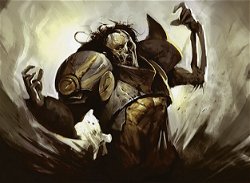
Finally, Archon of Cruelty is still the best non-legendary Reanimation in this format. It impacts the game as soon as it enters and puts pressure in every attack phase. It is also immune to Karakas.
The second critical step for this strategy, putting creatures in the graveyard, includes Faithless Looting, the best tool for that. It will both discard what you want to discard and find more answers so that you can push your game plan through. But it is not the only way to do this. You can also use your own discards on yourself. And you can also use Undercity Sewers' Surveil or Raucous Theater for that.
Finally, this deck plays 12 ways to bring its creatures back from the dead. Shallow Grave, in particular, is pretty effective with Griselbrand. It will allow Grisel to deal damage and steal 7 life points, which means you can draw another 7 cards.
The rest of the deck is simply acceleration so that you can explode on turn 1.
Why Play Turbo Reanimator in Legacy
In my last article, we mentioned player profiles, namely Johnny, Timmy, and Spike , and how that particular deck was best for Johnny players. That is, players that like complex, intricate combos.
This deck, however, is best for the other two player profiles. It lets you play giant creatures (Timmy) and is brutally efficient, besides also being able to steal wins from unaware opponents (Spike).
Theoretically, the power vacuum left by Oops after Undercity Informer was banned benefits this list. After all, many decks will probably leave their 4 Leyline of the Void behind soon.
Mulligan
We have to repeat once again: "This is a combo deck, so mulligan after your combo!" You can't really do anything else. You want hands that reanimate something at most in turn 2, preferably in turn 1. If you can do this with protection as backup, even better.
Let's see a few examples:
This hand is risky because it is vulnerable to counters. But, if you decide to play this deck, then you must know it is a "glass cannon". That is, it can set up powerful plays but also shatter and break on the spot if it is answered. When you're drawing first, this hand allows you to pass your turn without doing anything, discard one of your creatures if you have too many cards in hand, and try to push through Shallow Grave with Thoughtseize. Verdict: you should keep it.
This hand is also risky, but you can keep it because it has protection (Unmask) and a good chance of finding some reanimation with Looting, which will conveniently put Grisel where it should be. Verdict: you should keep it.
This hand doesn't have Reanimation and Raucous Theater is not reliable enough to give it to you, guaranteed. Verdict: you should mulligan it.
This hand is also risky, but nothing too unusual for this deck. If the opponent counters your Faithless Looting, your day will be ruined, but, fortunately, they won't always do this. Oftentimes, they'll prefer saving their counters for your reanimations. Verdict: you should keep it, but keep in mind that it is risky.
Building the Sideboard
This sideboard is pretty interesting. As your opponents will bring all sorts of graveyard hate against you, you'll take advantage of your many big creatures to turn this list into a sort of Sneak n'Show. You'll remove most of your reanimation kit and swap 15 cards to catch your opponent off-guard.
In game 3, you can be coy about it and leave them guessing as to what you'll do. Basically, the idea is to remove 9 reanimations from your sideboard (you still want some of them for your plan B), 4 Dark Ritual, and 2 Faithless Looting so that you can add 15 new cards and make this a new deck. You'll remove Cabal Therapy instead of Rituals if your opponent isn't playing counters.
Sideboard
Dimir Tempo
They have Thoughtseize as well as counters, which could ruin your day, but, apart from Raph & Mikey (who fold to Snuff Out), a reanimated monster usually does the trick. In game 2, you'll transform your list, and, if there is a game 3, you can go back to the original build if you didn't see any graveyard hate in their hand when you played your discards.
In:
Out:
Izzet Delver
This list is similar to Dimir, but they have even less answers to your reanimated creatures. Nonetheless, they can put enough pressure on you to make you lose a lot of life between Reanimate and Thoughtseize and eventually end the game by dealing damage directly. That's why your plan B post-side is Shallow Grave, not Reanimate.
In:
Out:
Trini Tron
If they start playing and hit you with a Trinisphere in turn 1... There's not much you can do. On the other side, they don't have counters, and you might manage to resolve your game plan before they lock down the game with the Ring or Karn. Your alternative game plan is an out for Trini because an Ancient Tomb and a colored land usually allow you to resolve Show and Tell or Stronghold Gambit already on turn 2.
In:
Out:
UWx Control
The goal is to open the way with discards and reanimate something that draws cards. Raph & Mikey can be targeted by Swords to Plowshares and not create any value. The most dangerous card post-side is Containment Priest, as you don't have an answer for it apart from hoarding resources and trying to push Archon of Cruelty by force, which is not at all a winning play. So, you must discard the scary Priest as soon as possible.
In:
Out:
Mirror Match
Welcome to the circus. You'll both race against each other in separate lanes, as your decks won't interact with each other. Whoever starts playing and manages to reanimate something on turn 1 wins. The sideboard doesn't do much in this case because Show and Tell and Stronghold Gambit are not useful and Sneak Attack is too slow. You'll definitely have to rely on luck.
In:
Nothing.
Out:
Nothing.
Final Words
Legacy still has space for all-in decks (that is, decks that bet all of their chips on a single play). Despite the latest bans, Oops is still valid, and Turbo Reanimator is basically second on this list if you consider decks in this style that can protect themselves. Though it is pretty one-dimensional, it is often more resilient than it seems, and the fact you can change it entirely post-side will often catch your opponent off-guard. They'll never be sure what you're going to play in games 2 and 3.
What do you think? Tell us your thoughts in our comment section below.
Thank you for reading, and see you next time!







 Sign in and join the conversation
— Comments 0
, Reactions 1
Be the first to comment